
Turkish Wine: A 7,000‑Year Story and a Treasure Trove of Native Grapes
Turkey has been making wine for some 7,000 years and still grows about 90 native wine grapes you can't taste anywhere else on earth. Here is the story most travellers never hear — and where to taste it, glass by glass, in Istanbul.
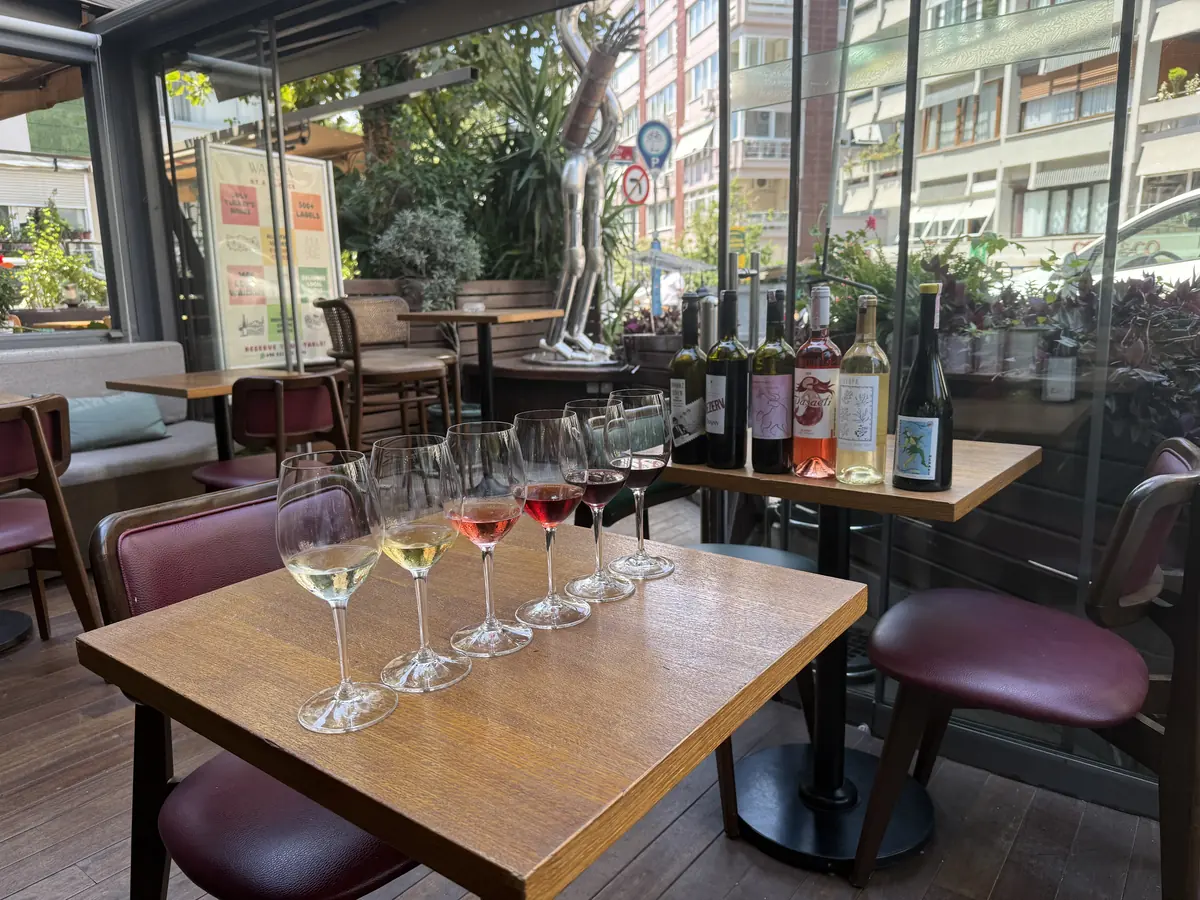
"What did you know about Turkish wine?"
Nearly half of the guests who visit WAYANA come from abroad. Recently, we asked Eric, an American guest who joined us for a tasting, a simple question: "What did you know about Turkish wine before coming to Turkey?"
Eric told us that he had never tasted Turkish wine before. Since Turkey shares a border with Georgia, however, he was hoping that he might be able to find Georgian wines here.
Ironic, isn't it? Turkey is a country that has witnessed some of the most important turning points in the history of civilization. It has a wine history stretching back 7,000 years. And yet, some of our international guests arrive without even knowing whether they will be able to find Turkish wine here.
So, let us introduce you to Turkey's extraordinary treasure trove of grapes.
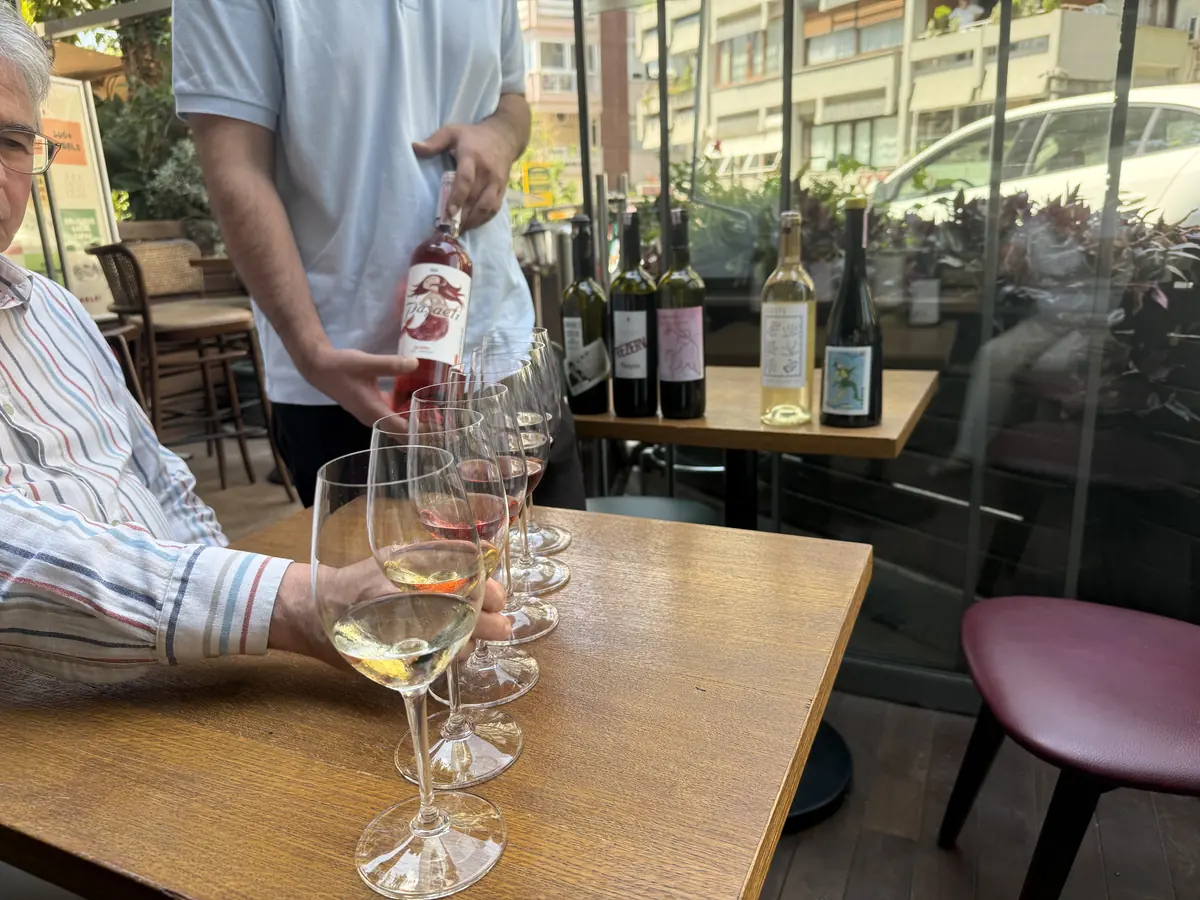
One of the world's richest countries for grape diversity
Turkey ranks between fourth and sixth in the world in terms of vineyard area, depending on the year. In other words, Turkey is among the world's leading grape-growing countries.
But we also possess an extraordinary treasure: Turkey is home to no fewer than 1,459 grape varieties, documented and preserved in the collection vineyards of the Tekirdağ Viticultural Research Institute.
Naturally, not every variety is suitable for winemaking — but among them is a significant and still-growing number of true wine grapes. As of 2026, we have identified 90 native Turkish grape varieties being used commercially for wine. Around 30 of these are vinified by multiple wineries, making it possible to find examples in different styles; the rest are the work of a small number of passionate producers, with plantings increasing every year.
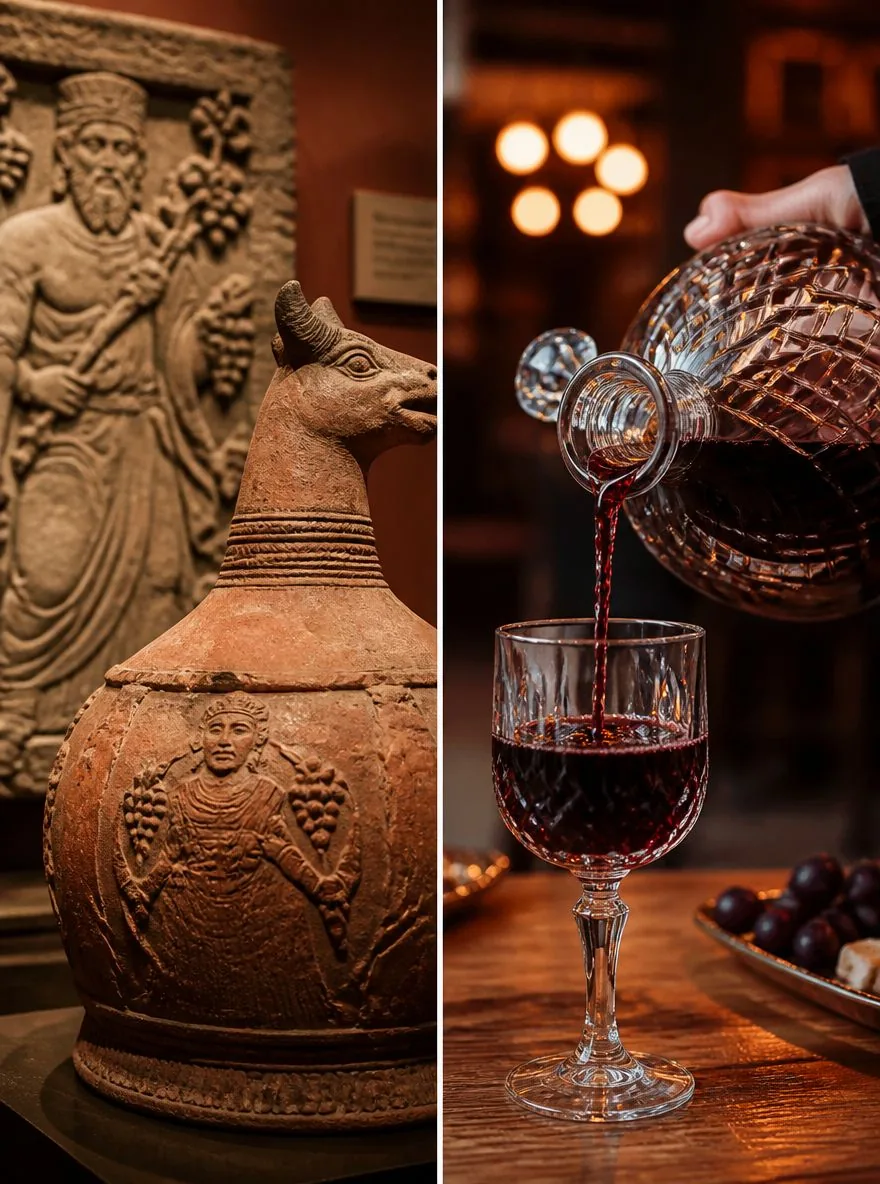
The 7,000‑year history of Turkish wine
The geography of modern-day Turkey has played a role in many of the great turning points in the history of civilization. Göbeklitepe and Karahantepe, discovered in Şanlıurfa in southeastern Turkey, and the wider Taş Tepeler Project that followed, are among the most striking examples.
This region is also immensely important to the history of grapes and wine. The Neolithic Period, beginning roughly 11,000 years ago, was the era when our ancestors began developing agriculture and, alongside it, viticulture. Recent scientific research suggests that grapevine domestication was associated with two major regions: the Fertile Crescent — of which southeastern Anatolia forms a part — and the arc stretching from eastern Anatolia towards present-day Georgia and Armenia.
Viticulture, which began in these lands thousands of years ago, continued across millennia without interruption — and survives to this day.
Wine found a place in virtually every civilization that flourished in Anatolia. You do not need to be an archaeologist to see the evidence: visit almost any ancient city in Turkey and you are likely to encounter traces of wine production — from facilities built at considerable scale to small, workshop-like installations. Clay and metal drinking vessels, jugs, mixing bowls, storage jars and amphorae fill Turkey's museums.
Indeed, according to Patrick McGovern, one of the world's foremost authorities on the history of wine, the Museum of Anatolian Civilizations in Ankara houses one of the world's richest collections of archaeological objects related to wine.
The Hittites, one of Anatolia's great ancient civilizations, were among the earliest societies known to have introduced rules concerning viticulture and wine — surviving clay tablets reveal how carefully vineyards were regulated, and how severe the penalties could be for those who broke the rules. The Kingdom of Urartu, in eastern Anatolia, left stone inscriptions recording vineyards and agricultural production — and the astonishing Şamran (Menua) Canal, an engineering feat some 51 kilometres long built partly to water vineyards, sections of which still stand today.
Anatolia, wine, religion and mythology
As one of the regions where humanity first transitioned to settled life, Anatolia also occupies a special place in the history of religion. In Jewish and Christian traditions, Noah's Ark is associated with Mount Ararat, the highest mountain in eastern Anatolia — and Noah himself is described in the biblical narrative as the first person to plant a vineyard and make wine.
According to Greek mythology, Semele, a mortal princess loved by Zeus, died after Hera tricked her into seeing Zeus in his true divine form. Zeus rescued their unborn child and sewed him into his thigh until he was ready to be born: Dionysus, raised by the nymphs of Mount Nysa. Best known as the god of wine and viticulture, Dionysus is also associated with nature, fertility and the rebirth of life in spring — and his traces can be found at ancient sites throughout Anatolia. In Roman mythology his role passed to Bacchus, and as the whole of Anatolia became part of the Roman Empire, wine retained a powerful cultural and religious presence for centuries.
Later, Christianity replaced the gods of Greece and Rome — but wine did not disappear. At the heart of Christian ritual, bread came to represent the body of Christ and wine his blood. Wine, already woven through the rituals of Anatolian civilizations, acquired an even deeper symbolic meaning.
Turkey's wine grapes, region by region
Look at a map of Turkey and you will see a country extending across two continents: Thrace on the European side of the Bosphorus and Dardanelles, and the much larger Anatolia to the east.
In Thrace, the native wine grapes that immediately come to mind are Papaskarası, Adakarası, Yapıncak and Kolorko. Towards the Aegean coast, diversity becomes even more exciting: Foçakarası, associated with ancient Phokaia, alongside the aromatic Bornova Misketi. Slightly inland grows Sultaniye — the seedless grape the world knows as Thompson Seedless, of which Turkey is the leading producer and exporter — used for raisins, dry whites and sparkling wines alike.
Further south lies Denizli and the native Çalkarası, capable of producing wines in almost every style. In the Taurus Mountains along the Mediterranean, recovery projects have brought some 20 forgotten varieties back to life over the past two decades.
In Central Anatolia, Kalecikkarası — rescued from near-extinction in the 1960s — produces elegant wines now attracting international attention, alongside Narince and Hasandede. And in the east, the old heart of it all: Öküzgözü of Elazığ, Ercişkarası, and — within the historical Fertile Crescent — Boğazkere and Horoskarası, plus grapes long cultivated by Syriac communities such as Mazrona and Karkuş.

Want tasting notes? Our guide to Turkey's native grapes profiles the nine essential varieties — what Narince, Öküzgözü and Kalecik Karası actually taste like.
As you can see, Turkey possesses an almost unbelievable treasure trove of grapes. It does not always reveal itself easily — you have to search for it. But if you are a wine lover and an explorer at heart, which country could offer a richer landscape of discovery? The answer is clear: Turkey.
Turkey's wine routes
Wine tourism in Turkey has only recently begun to gain momentum — which means you will often have these landscapes almost to yourself.
Best approached in two parts. The northern route runs towards the Black Sea through Kırklareli and Edirne — home to Aşağıpınar, one of the oldest known farming settlements in European Turkey. The southern route follows the Marmara shore towards the Dardanelles, dotted with meticulously kept vineyards, wineries and wine-tourism stays.
Begins in southern Thrace and crosses to the island of Bozcaada — small in size, considerable in importance, with four native grapes of its own: Kuntra (Karasakız), Karalahna, Vasilaki and Sıdalan.
Begun as a collaboration between ten local producers, the route helped turn Urla into one of Turkey's leading gastronomic destinations.
Six producers, enriched by historic churches and the archaeology of the ancient Kingdom of Lydia, legendary for its wealth.
Four local producers beside the travertine terraces of Pamukkale and several important ancient cities — one of Turkey's most exciting emerging wine destinations.
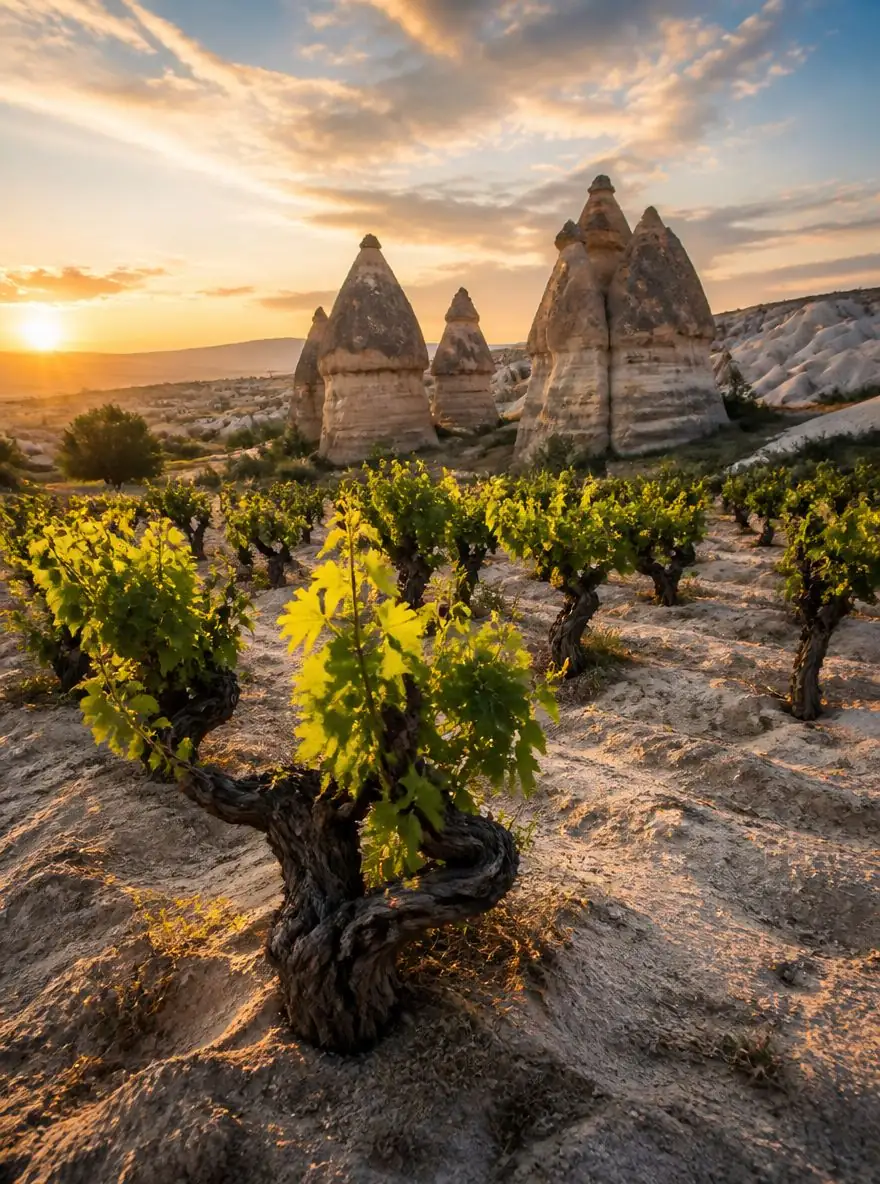
Centuries-old viticulture among the fairy chimneys, now organized as a producer collaboration — adding wine and gastronomy to one of the country's most dynamic tourism regions.

Is Turkish wine good?
When answering this question, we need to do more than simply tell you that our wines are good. We should explain why.
Turkey has a small number of wineries whose histories stretch back more than a century — but the real transformation of the country's modern wine industry began in the 1990s. With investments made by a new generation of winemakers and producers, quality began to improve rapidly, and since the 2000s Turkish producers have regularly returned from international wine competitions with medals and awards.
Because Turkey's overall production volumes remain relatively small, finding Turkish wines in shops abroad may not always be easy. But if you are visiting Turkey and wine matters to you, you will find plenty of wines and grape varieties that will pleasantly surprise you.
A tasting center for Turkish wine
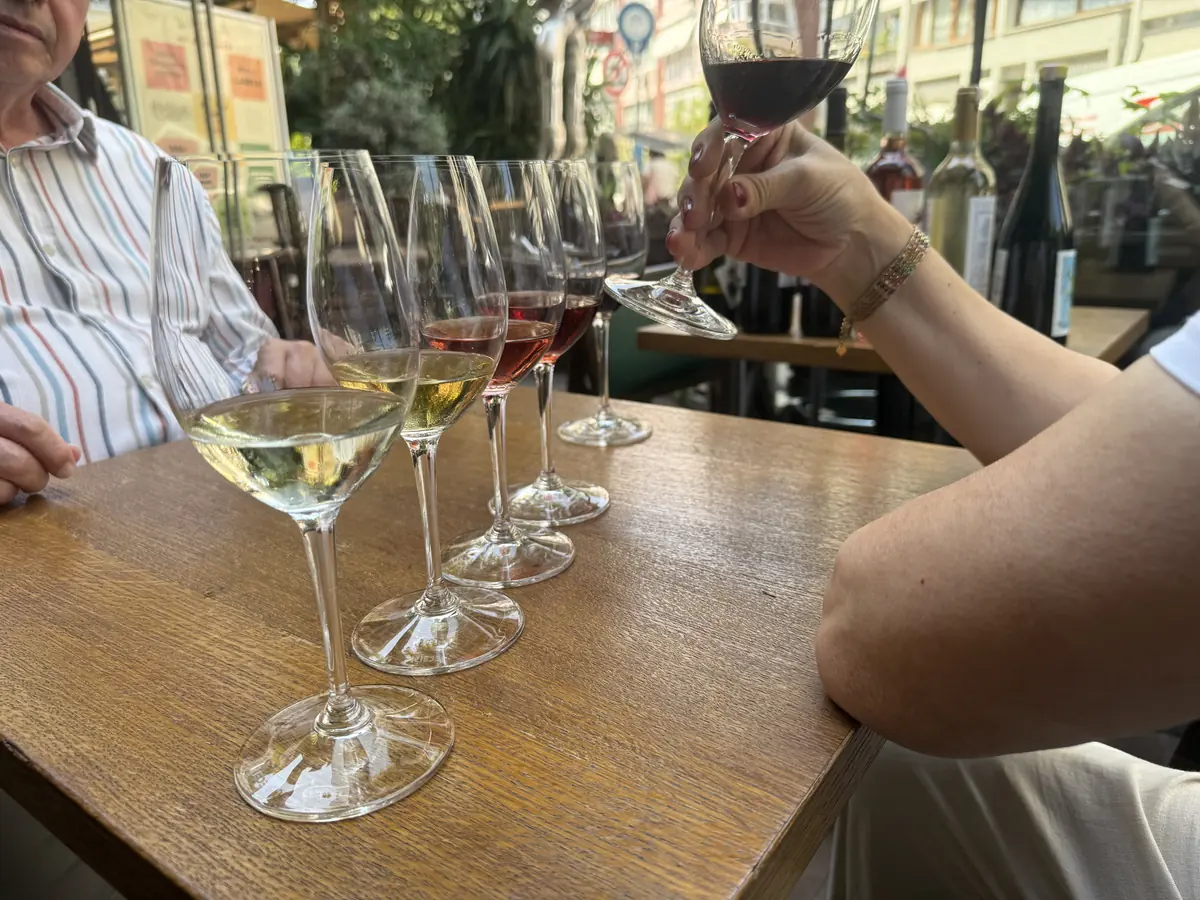
WAYANA is our family-run wine bar in Moda, Kadıköy, created with one purpose: to serve wines made in Turkey. There are currently 165 licensed wine producers in the country — our list includes wines from 156 of them, around 500 wines in all. Of the 90 native grapes in commercial production, our menu covers 85, and counting.
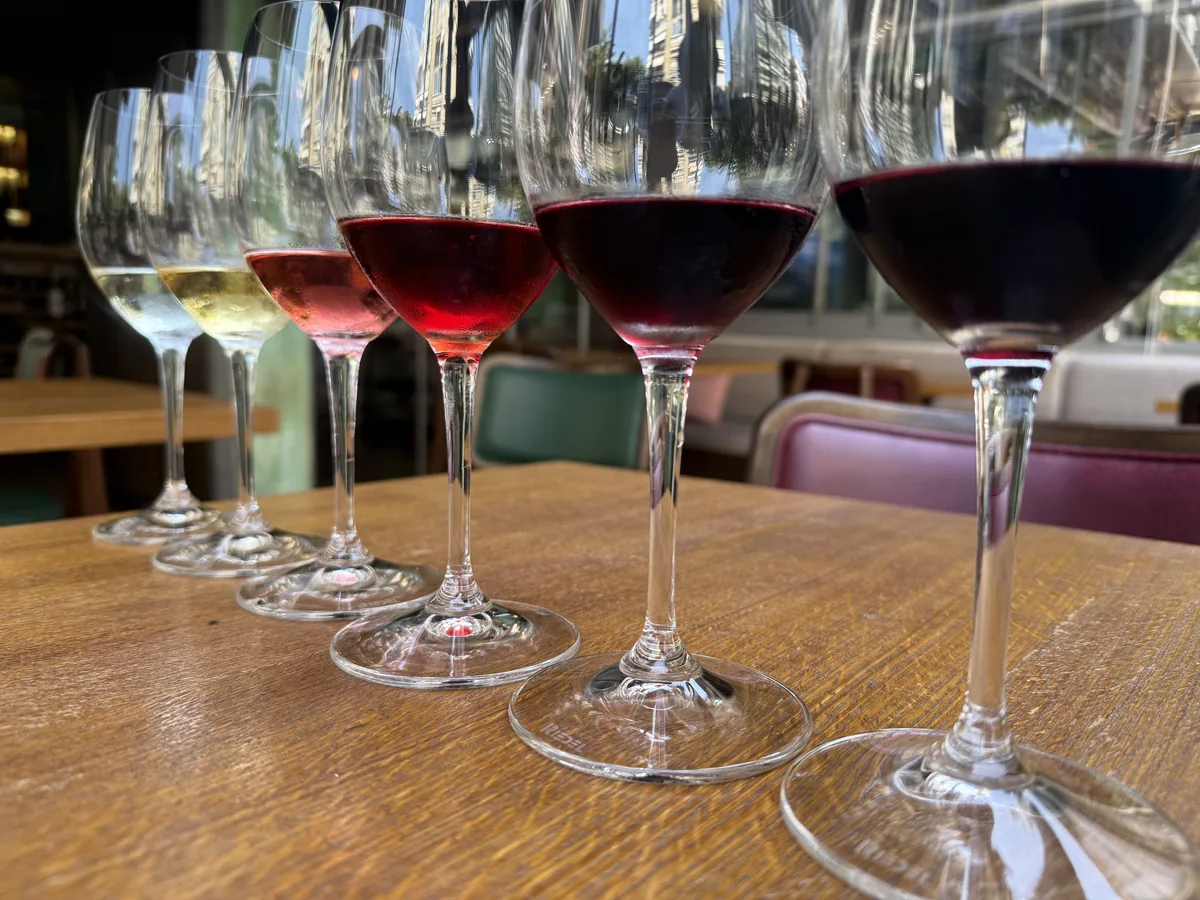
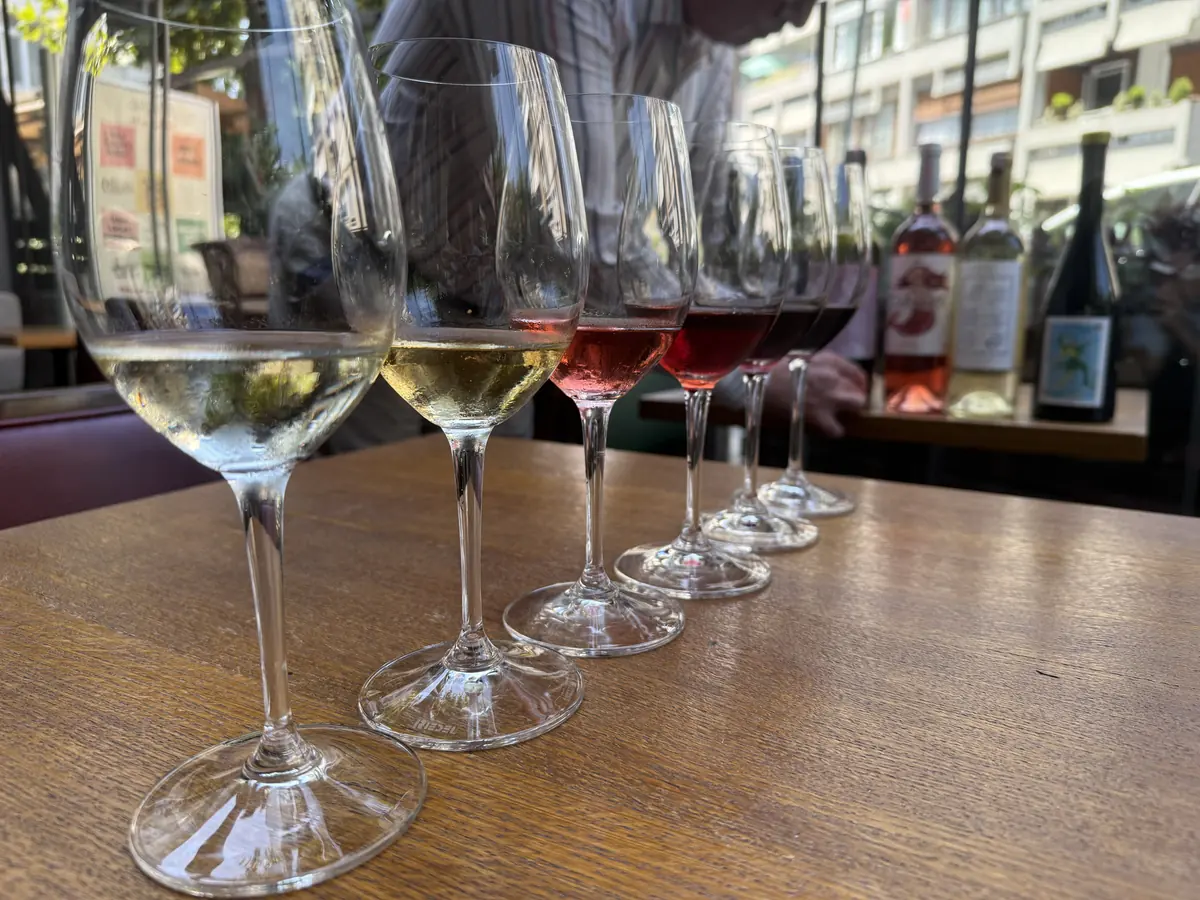
Since the day we opened, every wine on the menu has been available by the glass — and since October 2024, in a third-of-a-glass tasting pour as well. WAYANA is also a member of Iter Vitis, the Council of Europe Cultural Route dedicated to the heritage of the vine.
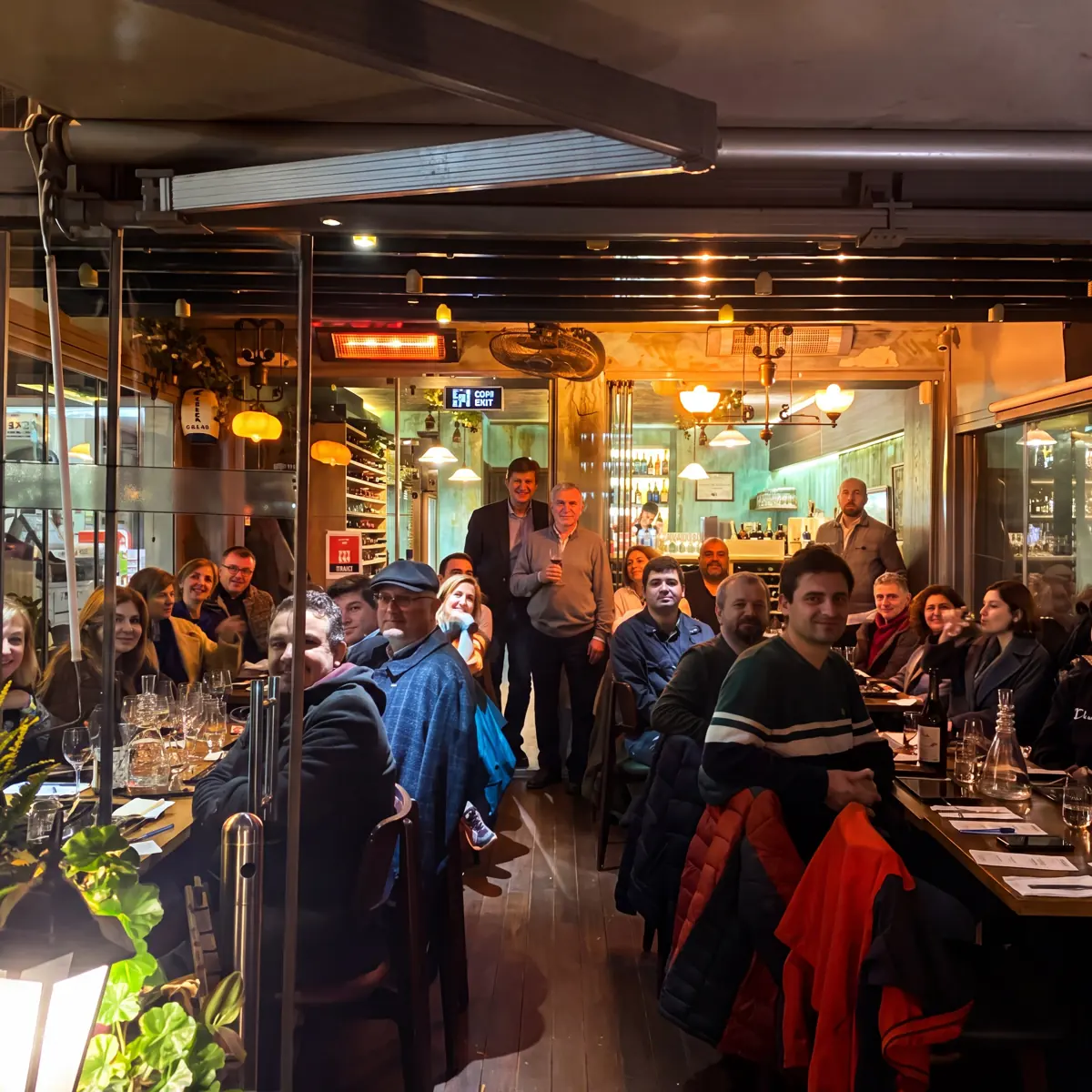
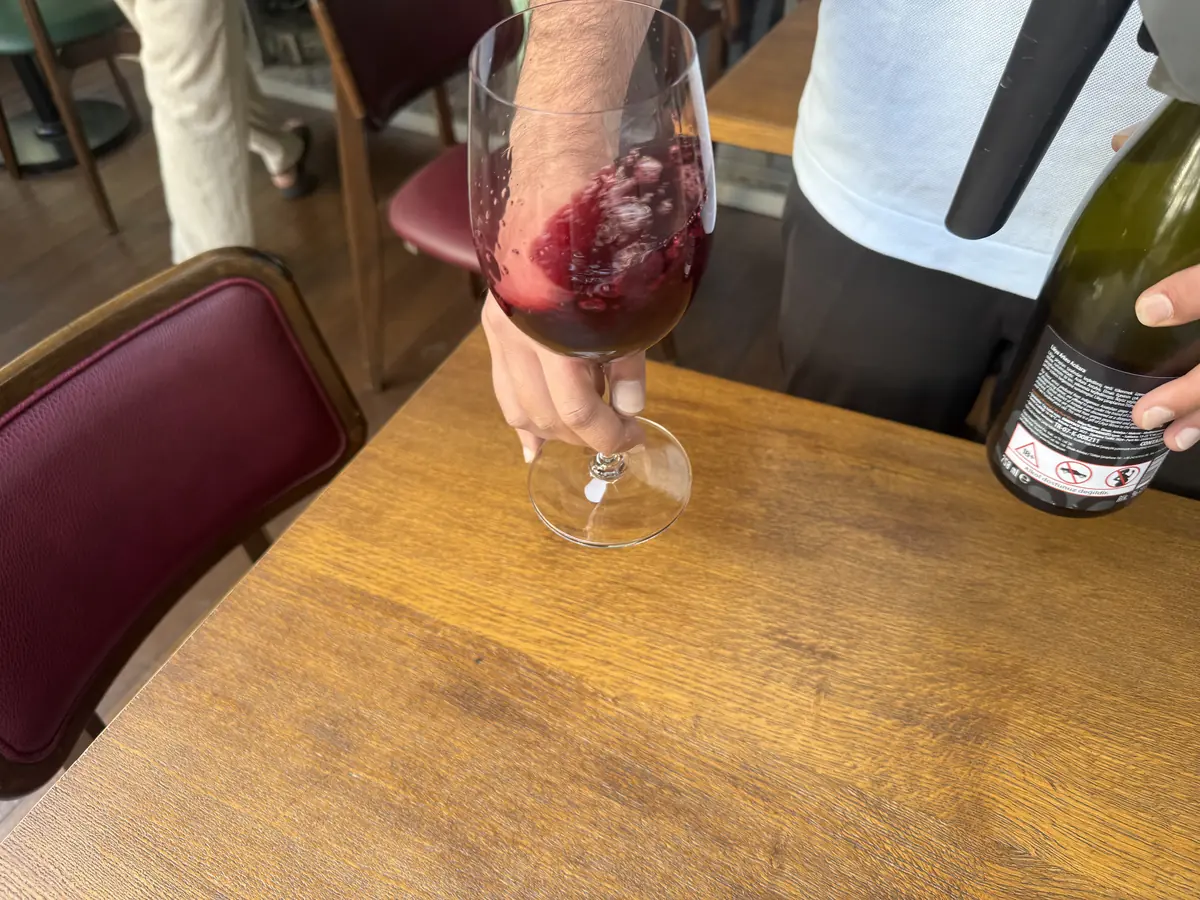
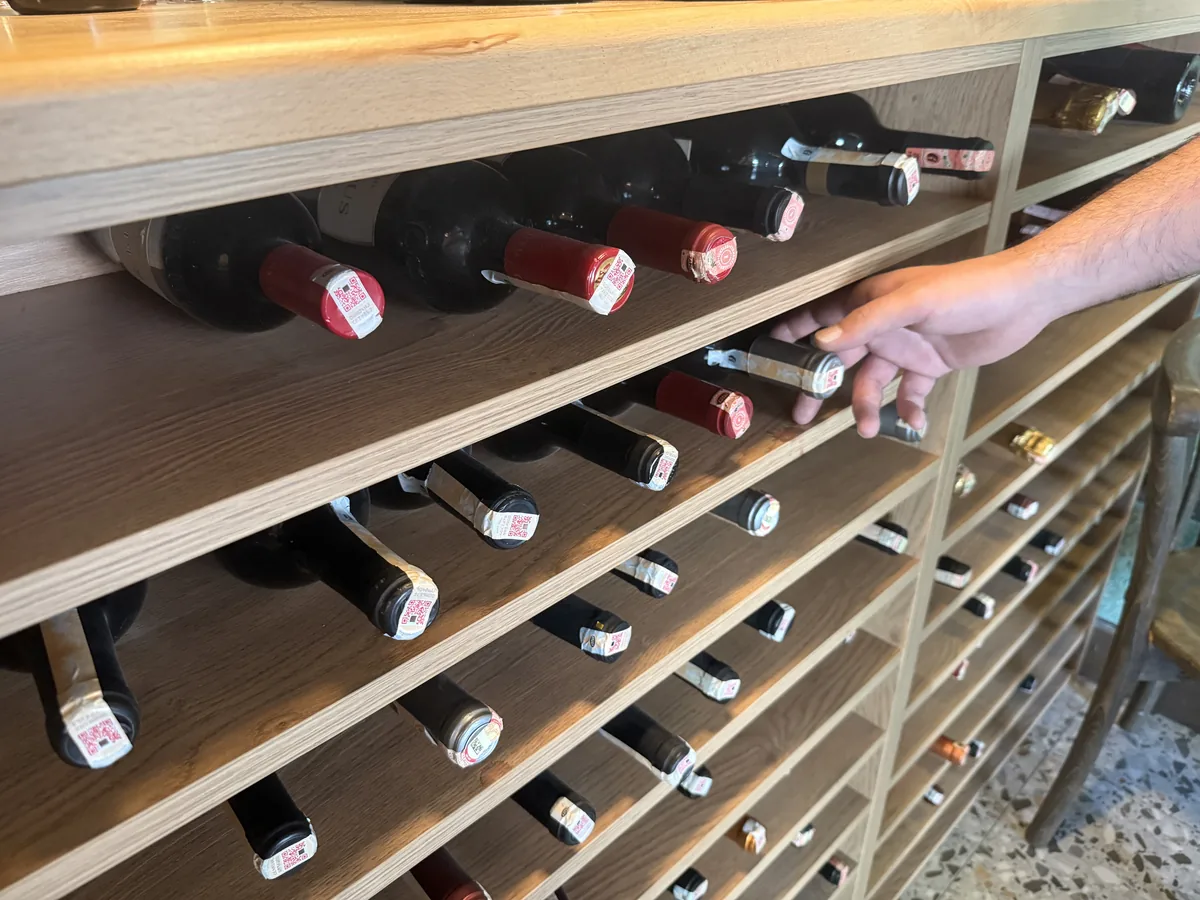
See WAYANA for yourself
A minute inside the courtyard in Moda — the glasses, the grapes, the atmosphere.
Getting there tonight
WAYANA sits in Caferağa, Moda — a short walk from the Kadıköy ferry terminal. The 20-minute ferry from Karaköy or Eminönü is the loveliest way to arrive: gulls, tea in a tulip glass and skyline views for the price of a transit fare. Make an evening of it with our Moda neighbourhood guide — or turn it into a full date night in Istanbul.

Something waiting to be discovered
If wine is one of those things that brings color, curiosity and pleasure into your life — and if you are coming to Istanbul and want to discover Turkish wine — we invite you to WAYANA for an experience we hope you will never forget.
Here, you can explore a wine culture thousands of years in the making, discover grapes you may never have heard of before, and meet knowledgeable sommeliers who can share the story behind every sip.
Coming for more than the wine? Our 3 day Istanbul itinerary builds a whole visit around that first glass — including an afternoon in Kadıköy and Moda on the Asian side, a short walk from our courtyard.
Because Turkish wine is not simply something to drink. It is something waiting to be discovered.
Questions travellers ask about Turkish wine
Yes — and it has improved dramatically since the 1990s, when a new generation of winemakers began investing in quality. Since the 2000s, Turkish producers have regularly won medals at international wine competitions. Native grapes like Öküzgözü, Narince and Kalecikkarası now stand comfortably beside mid-range Old World bottles, usually at friendlier prices.
Turkey is home to 1,459 documented grape varieties, preserved in the collection vineyards of the Tekirdağ Viticultural Research Institute. As of 2026, 90 native varieties are used in commercially available wines — a number that grows every year as forgotten grapes are rediscovered and replanted.
At WAYANA, a family-run wine bar in Moda, Kadıköy, on Istanbul's Asian side. The list covers around 500 wines from 156 of Turkey's 165 licensed producers, including 85 of the 90 native grapes in commercial production — and every single wine is available by the glass, or even as a third-of-a-glass tasting pour. It's a 20-minute ferry ride from Karaköy or Eminönü.
Turkey now has several organized vineyard routes: the Thrace route (the first, from 2014), the Troya route ending on the island of Bozcaada, the well-known Urla route near İzmir, the Lidya route in the inland Aegean, the Çal route beside Pamukkale, and the Cappadocia route among the fairy chimneys. Each combines wineries with remarkable archaeology and landscapes.
Because production volumes are modest, Turkish wine can be hard to find in shops abroad. The most rewarding approach is to taste widely while you're in Turkey — by the glass, so you can compare — note your favourites, and pick up bottles from a licensed shop before you fly. Most countries allow one or two bottles in checked luggage duty-free.